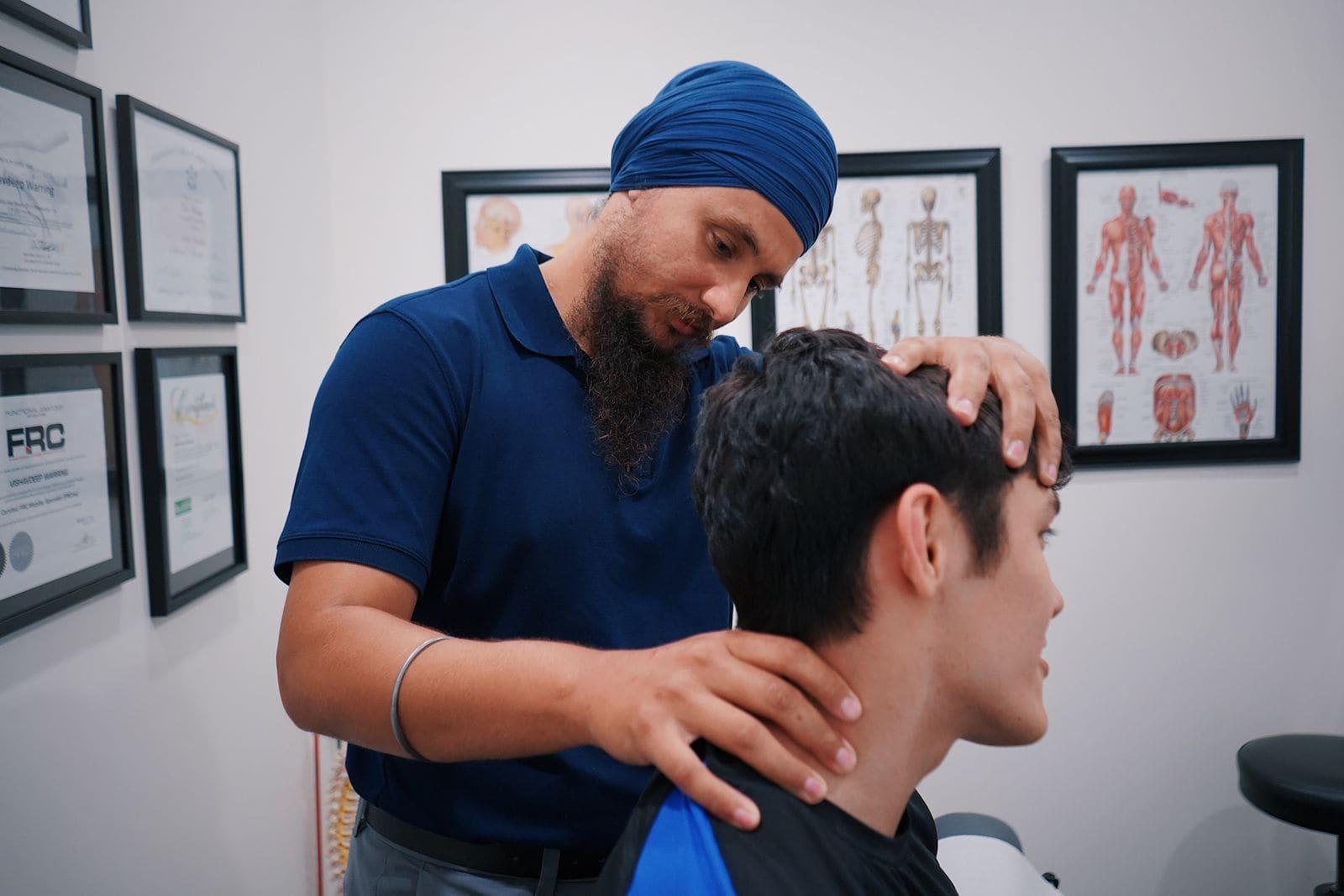
It's one of the most common things people say after a car accident: "I felt fine when it happened." Then the next morning they wake up and can barely turn their head. If that's happened to you, you're not imagining it and you're not being dramatic — whiplash genuinely tends to announce itself a day or two late, and there are clear physiological reasons why.
What's actually happening in your neck
Whiplash is caused by a rapid back-and-forth motion of the head and neck, most often in a rear-end or side-impact collision. That sudden movement can strain the small muscles, ligaments, and joints that support your neck, even at relatively low speeds. The damage is at a microscopic level to begin with — tiny tears in soft tissue rather than anything that shows up on an X-ray.
Your body's inflammatory response to that damage takes time to build. Swelling and stiffness develop over the following 24 to 72 hours as fluid and immune cells move into the injured area. That's why the ache you feel on day two can be worse than anything you noticed at the scene.
Why adrenaline hides the pain at first
In the minutes after a crash, your body floods with adrenaline and other stress hormones as part of the fight-or-flight response. Adrenaline is a natural painkiller — it raises your pain threshold and narrows your focus onto the immediate situation: checking on passengers, moving your car, talking to the other driver, waiting for police.
Once that adrenaline wears off, usually within a few hours, normal pain signalling returns. Combined with the inflammation building in your neck and shoulders, this is exactly when whiplash symptoms tend to become noticeable — often that evening or the following morning.
The general pattern
Every case is different, but a common pattern looks like this: mild stiffness or a dull ache within a few hours, growing tighter and more restricted through the next day, and often peaking in discomfort somewhere between 24 and 72 hours after the collision. Headaches, shoulder pain, and pain radiating between the shoulder blades frequently develop alongside the neck symptoms.
This delay doesn't mean the injury is less real or less worth attending to. It's simply how soft-tissue injuries behave, and it's exactly why medical guidance is to get assessed even when you feel okay straight after a crash.
Speed of the collision doesn't always predict severity either. Some people walk away from a fairly significant impact with mild, short-lived stiffness, while a relatively low-speed rear-end bump leaves someone with weeks of restricted movement. Body position at the moment of impact, whether you saw it coming, and individual factors like existing neck issues all play a part, which is part of why a proper assessment is more useful than guessing based on how the crash looked.
Signs it's more than routine stiffness
- Numbness, tingling, or weakness running down one or both arms
- A severe or rapidly worsening headache
- Dizziness, blurred vision, or difficulty concentrating
- Loss of grip strength or trouble holding objects
- Any change in bladder or bowel control
- Neck pain severe enough that you can't move your head at all
What to do when it shows up
If any of the signs above appear, treat them as urgent and call 000 or get to an emergency department — they can point to nerve or spinal involvement that needs prompt attention. For the more typical pattern of stiffness, aching, and reduced range of motion, the right move is to get a proper medical assessment rather than wait it out with painkillers and hope it settles on its own.
An assessment early in this window matters for two reasons. It lets a clinician check for anything more serious hiding behind ordinary-looking stiffness, and it creates a dated clinical record that links your symptoms to the accident — something that becomes important if you go on to make a CTP claim.
How this fits into your CTP file
There are time limits that apply to CTP claims, and getting medical documentation sorted early tends to make the whole process smoother. What treatment you can access and how it's funded depends on your individual circumstances — for the specifics, SIRA's website is the right place to check, and for anything involving a dispute about your claim, independent legal advice is worth getting — CTP Doctor is a medical service, not a law firm, and this is general information, not legal advice.
What CTP Doctor can do is the medical side: assess your neck and related symptoms properly, document the mechanism of injury and findings clearly, and refer you on to physiotherapy if that's clinically appropriate. We see people across NSW by telehealth, or in person where that suits the assessment better, so getting checked isn't dependent on where you live.

Been in an accident?
Book an appointment with one of our CTP doctors. We coordinate your care and handle the paperwork.
Official detail: SIRA motor accidents. CTP Assist: 1300 656 919.
FAQs
Talk to a CTP doctor
Book or get a call back
- Telehealth across NSW, or in person
- Certificate of Fitness issued or updated
- No claim number needed
Prefer a call back?